Imagine you're planning a surprise birthday party for a friend. You could spend six months secretly planning every detail: the perfect cake, the specific decorations, the exact menu. You could get it all perfect on paper, but when the day comes, you find out your friend went on a diet and can't eat the cake, or they've already seen the decorations at another party. All that hard work, and the result is a bit of a letdown.
Now imagine a different approach. You meet with a small group of friends every week. You decide on one small thing to do for the party, like booking the venue. The next week, you decide on another small thing, like creating a guest list. You talk to other friends to get their ideas and suggestions along the way. When your friend casually mentions their new diet, you can quickly change the cake order. You are constantly adapting and getting feedback to ensure the final party is a huge success.
This second approach is the essence of Agile. It's not a rigid plan you follow blindly. It's a way of working, a philosophy that prioritizes flexibility, collaboration, and delivering value in small, iterative chunks. It's about being responsive to change rather than sticking to a fixed plan.
The Story Behind the Agile Manifesto
Licensed by Preparesh
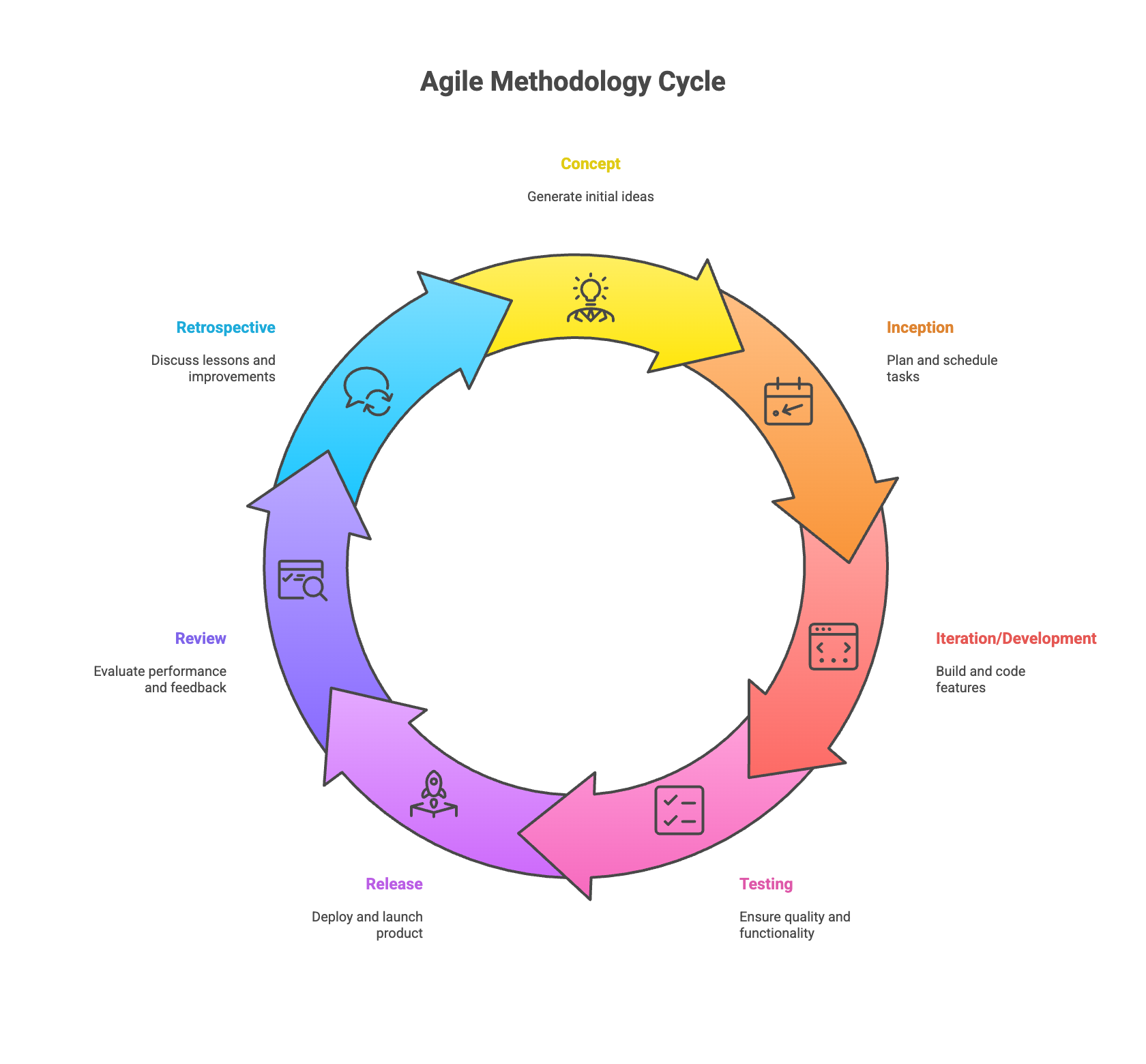
Agile wasn't born in a boardroom; it was born out of frustration. In the late 90s, software development was a slow, heavy process. Teams would spend months or even years on a project, following a rigid plan (often called the Waterfall model). By the time the software was finally delivered, the customer's needs had often changed, and the product was already outdated.
In 2001, a group of 17 software developers met in Utah and created the Agile Manifesto. This short document outlines four core values that changed the industry forever.
The Four Core Values of Agile
Individuals and Interactions over Processes and Tools: Agile teams value a good conversation and teamwork more than any specific tool or rigid process.
Working Software over Comprehensive Documentation: The ultimate goal is to build something that works, not to write a 500 page document that nobody will ever read.
Customer Collaboration over Contract Negotiation: Instead of arguing over the fine print of a contract, Agile teams work closely with their customers to ensure they are building exactly what the customer needs.
Responding to Change over Following a Plan: The world changes quickly. Agile teams embrace new requirements and pivot when necessary.
These values aren't about eliminating documentation or tools entirely. They're about prioritizing what truly matters: people and a working product.
Key Agile Frameworks: Different Flavors of Agile
The Agile Manifesto gives us the guiding principles, but how do we actually put them into practice? This is where different Agile frameworks come in. Think of them as different types of martial arts, all based on the same philosophy but with different moves.
Scrum
Licensed by Preparesh
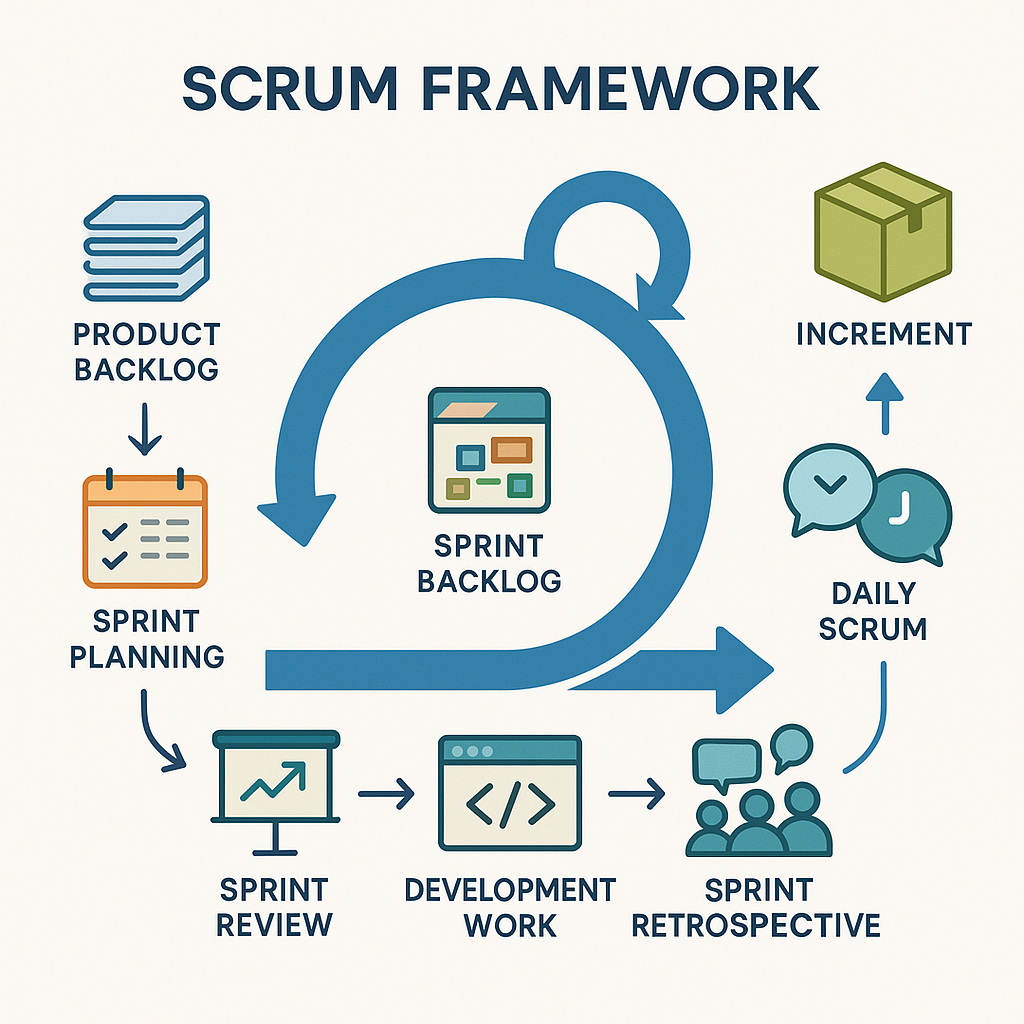
Scrum is the most popular Agile framework. It's built around a series of short work cycles called sprints, typically two weeks long. At the end of each sprint, the team should have a working, potentially shippable piece of software.
Here are the key parts of Scrum:
Product Backlog: A prioritized list of all the features, bug fixes, and tasks for the product. It's like a wish list for the project.
Sprint Planning: At the start of each sprint, the team meets to decide which items from the Product Backlog they can realistically complete.
Daily Scrum (Stand up Meeting): A short, 15 minute meeting where each team member answers three questions: "What did I do yesterday?", "What will I do today?", and "Are there any obstacles in my way?" This keeps everyone on the same page.
Sprint Review: At the end of the sprint, the team demonstrates the working software to stakeholders and gets feedback.
Sprint Retrospective: The team meets to discuss what went well during the sprint and what they can improve in the next one. This is all about continuous improvement.
Example: Imagine we are building a photo editing app. In one sprint, our team might decide to focus on adding a "crop image" feature. We'll plan it out, build it, test it, and by the end of the two weeks, we'll have a working crop feature that we can show to our product manager.
Kanban
Licensed by Preparesh
Kanban is another popular framework, famous for its visual approach. It's less about strict time boxes and more about managing the flow of work.
Here's how it works:
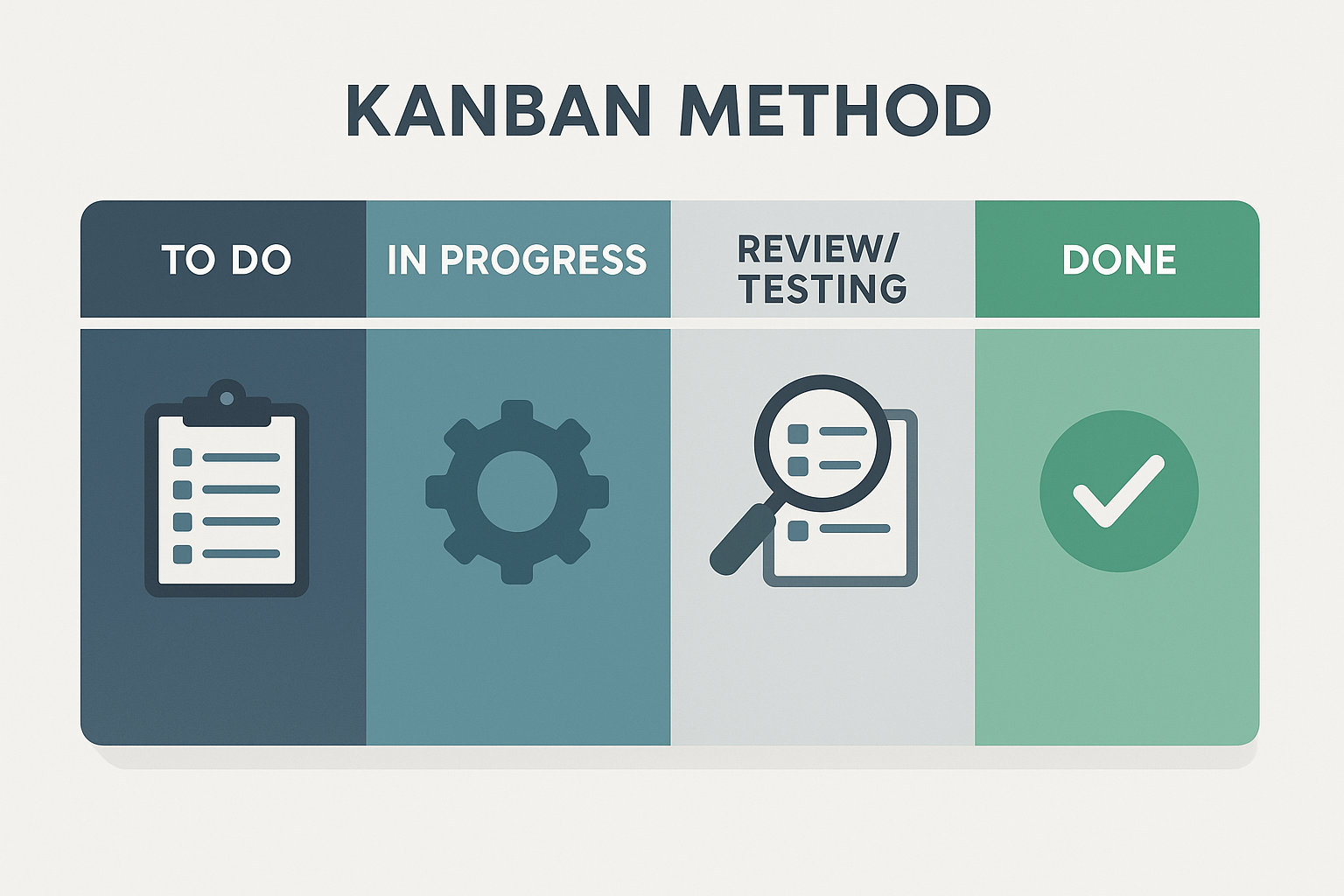
You use a Kanban board, which is a visual representation of your workflow. The board has columns representing different stages of work, such as "To Do," "In Progress," and "Done."
Work is represented by cards (or digital tickets) that move from left to right as they progress through the workflow.
The key principle of Kanban is to limit the amount of work in progress (WIP). This helps the team focus and prevents bottlenecks.
Example: For our photo editing app, the Kanban board might have columns like "To Do," "In Progress," "Review / Testing," and "Done." When a developer is ready for a new task, they pull a card from "To Do" into the "In Progress" column. This ensures they don't start five things at once and can focus on one thing at a time.
The Agile Advantage: Benefits and Challenges
Agile is not a silver bullet, but its benefits are undeniable.
The Benefits of Going Agile
Faster Delivery: By delivering small chunks of working software, you get value to your customers much quicker.
Better Quality: Constant feedback and iterative testing mean you can find and fix bugs much earlier.
Happier Customers: The customer is involved throughout the process, so they get a product that truly meets their needs.
Happier Teams: Agile promotes a collaborative and empowered work environment.
Adaptability: When the market shifts, or a new competitor emerges, an Agile team can pivot and change direction much more easily.
The Challenges of Agile
Requires Discipline: Without a disciplined team and a strong leader, a Scrum project can devolve into chaos.
Not Always Right for Every Project: A large scale, well defined project with no room for change might still be a better fit for a more traditional approach.
Cultural Shift: Moving to Agile requires a big change in an organization's mindset, and that can be difficult.
Final Thoughts: Agile is a Mindset
Agile is more than just a set of meetings or a fancy board with cards on it. It's a fundamental change in how you approach work. It's about a commitment to continuous improvement, a belief in the power of people, and a focus on delivering value over following a rigid plan.
As a junior engineer, embracing the Agile mindset will make you a more effective and valuable member of any team. It's about being proactive, collaborative, and always ready to adapt to new challenges.